News

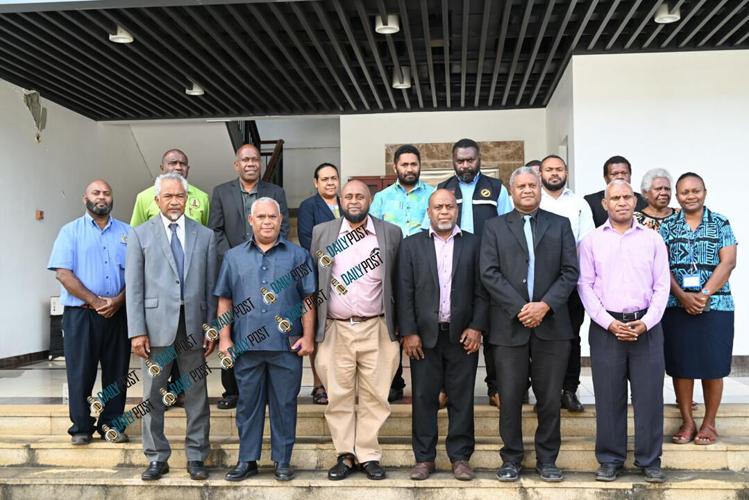
Our founding members

image iconimage iconimage iconimage iconimage iconimage icon

Newsletter

Stay updated on our latest news.

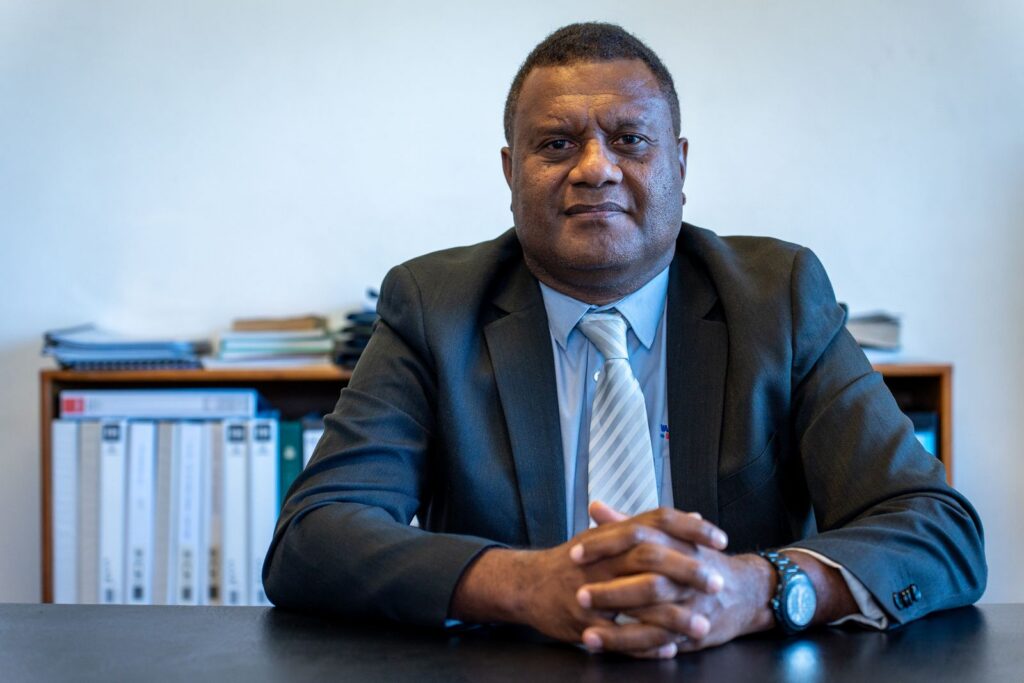
A veteran industry insider with nearly thirty years of financial regulatory experience, Noel Vari brings a wealth of strategic insight and tactical know-how to the self-regulatory body representing Vanuatu’s online brokers.

Founded in 2020 by six registering agents under the country’s Financial Dealer Licence (FDL) framework, the Financial Markets Association has since established itself as a leading advocate for high professional standards of conduct, transparency and investor protection for the benefit of all market participants. Its membership, now 17 strong, includes some of the longest-established and most globally recognised names in the industry.

Appointed as an independent consultant in the role of Head of Business Development, Mr. Vari has been tasked with leading the FMA into its next chapter by deepening its industry presence, expanding its membership and services, and broadening its impact on the wider community. He will consult extensively with key stakeholders, including the VFSC, VFIU, VIPA and relevant government agencies, to ensure that FMA initiatives reflect the needs of its members and the public.

His extensive experience in AML/CTF matters will be particularly valuable as Vanuatu prepares for the Asia/Pacific Group’s (APG) Mutual Evaluation scheduled for November 2026.

Reporting to the Executive Committee of founding FDL agents, Mr. Vari will incorporate member perspectives while upholding the FMA’s values of accountability, expertise, efficiency and fairness. Ultimately, his role aims to strengthen Vanuatu’s financial services industry and contribute to the nation’s social and economic advancement.

A native of Araki Island in South Santo, Noel Vari holds a Bachelor of Economics from the University of Papua New Guinea (2003) and a Master of Business from the University of Sydney (2005). He was inducted into Beta Gamma Sigma, the international honour society recognising academic excellence in business studies.

After a four-year tenure as Assistant Statistician for the Government of Vanuatu, Mr. Vari joined the Reserve Bank of Vanuatu as an assistant supervisor. He rose through the ranks to become Director of the Financial Regulation Department in 2007 and later Deputy Governor in 2021, a position he held until his departure from the institution earlier this year.

In his senior central-bank roles, he oversaw key functions across banking, payments and settlements, currency, administration and financial markets, while contributing to major national and regional regulatory initiatives, including digital identity projects, AML/CTF supervision, payment-system reforms, the comprehensive credit-reporting programme and financial-inclusion efforts. He was also part of the dedicated public–private task force that successfully secured Vanuatu’s removal from the FATF Grey List in 2018.

“Noel brings a rare combination of experience, judgement and genuine passion for the industry,” said Martin St-Hilaire, President of the FMA. “He understands where Vanuatu’s financial sector needs to go next, and he knows how to get people working together to make it happen. We’re very lucky to have him leading this next chapter.”

The Vanuatu Government has committed to strengthening financial integrity and its global reputation with the official launch of the Mutual Evaluation Technical Team (METT), a national taskforce mandated to lead the country’s preparations for the Asia/Pacific Group on Money Laundering (APG) Mutual Evaluation in November 2026.

This article originally appeared in The Vanuatu Daily Post.

The launch, officiated by Prime Minister (PM) Jotham Napat at the Prime Minister’s Office (PMO) Complex yesterday, marked what he described as a “national moment” in Vanuatu’s fight against financial crime. “This is not just a technical milestone. It is a national moment that reflects our collective resolve to protect Vanuatu’s financial system, uphold international standards, and demonstrate our commitment to transparency, integrity, and resilience,” PM Napat said.

He reaffirmed the government’s full commitment to meeting international Anti-Money Laundering (AML), Counter-Terrorism Financing (CTF), and Counter-Proliferation Financing (CPF) standards, noting that the upcoming APG evaluation will be a crucial test of the nation’s systems and institutions.

“The upcoming APG Mutual Evaluation is more than a review. It is a test of our systems, our institutions, and our national will. It will assess not only our laws and policies, but our effectiveness—how well we implement, how well we supervise, and how well we protect our people and our economy,” he said.

The Prime Minister noted that the outcome of the evaluation will directly influence Vanuatu’s international standing, including access to correspondent banking, foreign investment, and development finance.

“This evaluation will shape how the world sees us. It will influence our access to correspondent banking, foreign investment, and development finance. We must be ready, and we will be,” he said.

The newly established METT is composed of over 20 senior officials from key institutions, including the Financial Intelligence Unit, the Reserve Bank of Vanuatu, the Vanuatu Financial Services Commission, the Vanuatu Police Force, the Office of the Attorney-General, the Office of the Public Prosecutor, and the Department of Customs and Inland Revenue, among others. Private sector reporting entities will also participate as observers.

Under the oversight of the National Coordinating Committee (NCC), the METT will serve as the technical backbone of Vanuatu’s mutual evaluation process. It will coordinate national efforts, prepare key evaluation deliverables, and ensure every institution is aligned and ready for the APG assessment.

PM Napat commended the NCC and all participating agencies for their collaboration and dedication. “The Mutual Evaluation Technical Team is our engine room. It brings together our finest minds from across government, regulators, law enforcement, and the private sector. It will coordinate our national response, compile our evidence, and ensure that every sector, every stakeholder, and every standard is addressed,” he said.

He added that the government’s goal goes beyond compliance. “We will meet the FATF standards. We will demonstrate effectiveness. We will build a regime that is not only compliant, but resilient, inclusive, and nationally owned,” he said, calling on all ministries, regulators, and reporting entities to “own it, prepare for it, and deliver on it.”

Director General (DG) of the Prime Minister’s Office, George Maniuri, said accuracy and transparency in institutional reporting are crucial.

“As we all are aware, there are issues in terms of reputation and credibility in the eyes of international financial institutions. It’s important that the work we do in each institution is properly and accurately reported. That will lift transparency among us and also give confidence to our partners, investors, donors, and other stakeholders,” Maniuri said.

The establishment of the METT demonstrates high-level political commitment and national ownership of AML and CTF reforms.

PM Napat concluded, “Let this launch mark the beginning of a new chapter—a chapter of national coordination, technical excellence, and international credibility. Together, we will rise to the challenge. Together, we will deliver a Mutual Evaluation that reflects the best of Vanuatu.”

Vanuatu urged to embrace indigenous wisdom for sustainable development

Daily Post, April 25, 2025 – Caribbean economist and advocate for inclusive, resilient economies Marla Dukharan addressed participants at the YumiStanap Vanuatu dialogue yesterday, offering powerful insights drawn from her Caribbean background and praising Vanuatu for preserving its indigenous heritage in ways many other post-colonial nations have not. Read the full story

Jamaica’s EPOC model tipped as accountability tool for Vanuatu

Daily Post, April 25, 2025 – Jamaica’s Economic Programme Oversight Committee (EPOC) is one of the most successful inclusive mechanisms in place that uses transparency and accountability to drive implementation in the country. Economist and leading Caribbean advisor Marla Dukharan, from Trinidad, introduced this independent body —originally established in Jamaica in 2013— and encouraged the Vanuatu Government to consider a similar approach. Read the full story

Economist slams EU blacklisting of Vanuatu as discriminatory and unfair

Daily Post, April 22, 2025 – Caribbean economist and regional economic policy advisor Marla Dukharan has criticised the European Union’s (EU) decision to blacklist Vanuatu over tax governance and financial regulation concerns as discriminatory, unjust, and immoral. Speaking in a recent interview, Ms Dukharan urged Vanuatu to support the United Nations (UN) Convention on Tax, a multilateral initiative aimed at improving global tax cooperation. Read the full story

Economist says Vanuatu’s economic situation not as severe as perceived

Daily Post, April 19, 2025 – The economic situation in Vanuatu is not as severe as some may think, says Marla Dukharan, a Caribbean economist and leading advisor on regional economic policy. Speaking on Vanuatu’s current economic outlook, Dukharan noted that while inflation and unemployment are concerns, they do not lead to the kind of deep social problems seen in some other small island nations. Read the full story

Seasonal work abroad brings economic hope, but social costs

Daily Post, April 19, 2025 – Caribbean economist and leading regional economic policy advisor Marla Dukharan has drawn attention to the complex effects of labour mobility programmes such as seasonal work schemes, which are increasingly appealing to young people in developing nations like Vanuatu. Read the full story

Airlift vital for more than tourism, says Caribbean Economist

Daily Post, April 16, 2025 – While aviation and tourism are two distinct sectors, they remain deeply interdependent, says Marla Dukharan, a Caribbean economist and leading advisor on regional economic policy. Speaking on the importance of connectivity in island economies like Vanuatu, Dukharan noted that tourism exists in virtually every country, from the most isolated to some of the wealthiest, including destinations like Dubai. Read the full story

Caribbean Economist urges Vanuatu to use its voice at the UN

Daily Post, April 12, 2025 – Vanuatu may be thousands of kilometres from the Caribbean, but according to economist and Caribbean policy advocate Marla Dukharan, the challenges and opportunities facing both regions are remarkably similar. Visiting Vanuatu for the first time last week, Ms Dukharan brought not only fresh perspectives but also valuable lessons from island nations like her own, Trinidad and Tobago. Read the full story

This presentation was given by VFSC officers to a group of financial services industry representatives.

Topics covered include the purpose of the Act; different types of VASP licenses; license application and renewal fees; application requirements and process; special clauses for Initial Token Offering and Fintech Sandbox Utility; Manager, Director and CTO profile requirements; AML & KYC risk management; custodian requirements; external audits; record keeping; and security breach protocols.

Happy reading! For more details or to apply for a license, contact an FDL agent.

New opportunities have emerged for fintech investors in Vanuatu since Parliament passed the Virtual Asset Service Provider (VASP) Act on March 26.

The law recognized digital assets as “a medium of exchange, a unit of ac count, or a store of value,” and established six types of VASP licences for virtual asset exchanges (D), transfer services providers (D1), custodians (D2), financial services providers (D3), banks (D4), and token issuers (ITO).

“Vanuatu now has the legal tools to prosecute bad actors who are looking to use its jurisdiction to scam people. No one will be able to claim another Satoshi Island,” said Australian regulatory consultant Loretta Joseph, in reference to a fraudulent 2022 development project off the coast of Santo.

Serious screening at the door

VASPs are to be regulated by the Vanuatu Financial Services Commission (VFSC), just like dealers of foreign exchange, commodities, stocks, and other traditional assets operating under the Financial Dealer Licensing (FDL) Act. The VASP Act can be seen as an extension of the FDL Act since VASP licenses will only be issued to existing holders of all four FDL classes (A, B, C, D).

“We’re asking applicants to go through this lengthy process in order to select only the most serious investors. Vanuatu doesn’t have the resources to supervise a large number of licensees, so we need to properly screen at the door,” explained Loretta Joseph, who was instrumental in drafting the law.

It took her almost five years to complete, in collaboration with the VFSC and two dedicated government committees, the Distributed Ledger Technology Task Force and the Virtual Assets Task Force.

“Labour of love”

“We had to go through a pandemic, a cyclone, and an earthquake. We didn’t have much funding. Everything that could go wrong did go wrong. But we managed to put it together. It was a true labour of love, and I think the result speaks to the resilience of the people of Vanuatu and their elected representatives,” Joseph confided.

Cryptocurrency transactions were initially banned in Vanuatu as a precaution when these technologies were emerging and tied to financial scandals. As digital assets matured into the mainstream, their development paved the way for the VASP Act to regulate innovation responsibly.

“Vanuatu is now equipped with sensible legislation that embraces virtual assets while carefully mitigating risks. It would actually be riskier at this point to not regulate it!” Joseph noted.

Clarity instead of darkness

The VASP Act aligns with international standards set by global organizations, including the Financial Action Task Force (FATF), the Asia Pacific Group on Money Laundering (APG), the International Organisation of Securities Commissions (IOSCO), the OECD, and the EU.

Fintech investors now enjoy regulatory clarity regarding local economic substance, hiring criteria for managers, expertise and operational status, financial soundness and accounting practices, reporting and filing obligations, handling of complaints, and penalties for regulatory violations. 

The law also provides a “sandbox” clause, allowing select entrepreneurs to test innovative concepts in a controlled environment before applying for a license. “It’s a great way for them to trial their business models without risking the financial system,” Joseph explained.

Commonwealth leads the way

Drawing on her experience in Nigeria, Mauritius, and the British Virgin Islands, Loretta Joseph, an Advisor to the Commonwealth Secretariat on Virtual Assets, sees Vanuatu as part of a movement of small nations shaping the future of finance. She is now advising Antigua, St. Lucia, and Jamaica on similar laws.

“It’s heartening to see small jurisdictions like Vanuatu lead with agility, while larger economies like the US, the EU and Australia lag behind,” Joseph said. “As the first Pacific island nation to enact such comprehensive legislation, Vanuatu offers legal clarity that attracts investors and sets a global standard for digital finance.”

PRESS RELEASE FROM THE PRIME MINISTER’S OFFICE

The Right Honourable Prime Minister, Charlot Salwai Tabimasmas SARIBO (MP), announced that Vanuatu has prioritised its efforts to comply with the international anti-money laundering and combating the financing of terrorism (AML/CFT) requirements. PM Salwai reiterated that Vanuatu will remain a strong and committed partner in the global fight against illicit financial flows and related financial crimes.

Assessment of Vanuatu’s AML/CFT Framework

As a founding member of Asia/Pacific Group on Money Laundering (APG), Vanuatu’s AML/CFT framework was assessed by the APG in 2006 and 2015 under the Financial Action Task Force (FATF) assessment methodologies.

“I am pleased to announce that Vanuatu has volunteered to expedite its next evaluation by the APG, which will commence in March 2026,” the Prime Minister said.

“The National AML/CFT Coordinating Committee (NCC), in consultation with the APG and our development partners, has been tasked to develop and implement comprehensive preparatory measures that will address residual gaps and weaknesses in our AML/CFT system and will demonstrate to the APG that Vanuatu has complied with the global standards and that our AML/CFT regime is increasingly effective.”

In 2018, Vanuatu was successfully removed from the FATF “grey list” because of the significant progress made in improving the AML/CFT regime, particularly on legal, regulatory and related technical compliance through the collective effort from all stakeholders.

“While Vanuatu is currently complying with 39 out of the 40 FATF Recommendations, our preparatory efforts will focus on improving the effectiveness of our AML/CFT framework against 11 key outcomes,” the Prime Minister said.

Emphasis on Risk and Context

The FATF assessment methodology will require the APG assessment team to pay careful attention to Vanuatu’s risk, context and materiality factors, particularly, the low level of risk Vanuatu poses to the international financial system, low risk for organised financial crimes, absence of large-scale money laundering, low level of domestic terrorism and proliferation financing risk, and Vanuatu’s almost negligible contribution to global illicit financial flows. This approach is also intended to mitigate any unintended adverse consequences of the global AML/CFT standards, such as, financial exclusion, de-risking and closure of bank accounts of certain type of customers, closure of correspondent banking relationships, and undue targeting of non-profit and charity organisations. Gaps that will be identified during the mutual evaluation are generally expected to carry lessor weight when determining compliance ratings and level of effectiveness in view of Vanuatu’s risk, context, and materiality factors.

National Risk Assessment

The NCC is working with our development partners to finalise Vanuatu’s third national risk assessment by the end of 2024. In the global context, Vanuatu poses low level of risk to the international financial system and is expected to remain low risk for money laundering, terrorism financing and proliferation financing.

Private Sector

Vanuatu’s preparatory efforts also include the private sector financial institutions and designated non-financial businesses and professions, such as, Vanuatu’s small casino and gaming sector. The NCC will work with these institutions to ensure that weaknesses in applying risk-based preventive measures identified and addressed.

AML/CFT Measures for High-Focus Sectors

“Vanuatu has made a strong commitment to address any further gaps that may be identified in the upcoming mutual evaluation process. In fact, the NCC has already begun preparatory work, including assessing gaps in Vanuatu’s high-risk and high-focus areas, such as, the online gaming, virtual assets, and citizenship program,” the Prime Minister said.

Acknowledgements

Prime Minister Salwai said that Vanuatu is one of the first small island country that will undergo mutual assessment in 2026 and is among over 200 countries around the world that will be assessed under the same criteria and methodology in the new round of mutual evaluations.

“I would like to thank the APG team for their high-level visit to Port Vila in August 2024 and I wish to reaffirm my government’s commitment to implement the FATF AML/CFT standards, commensurate with our risk, context and materiality factors. 

I would like to also thank our key development partners, namely, the APG, Australia, New Zealand, United Kingdom, USA, the Asian Development Bank, the World Bank Group, and the United Nations and other international and regional organisations and state governments, for their ongoing support and assistance to further improve Vanuatu’s compliance with international standards and best practices, including the anti-money laundering and combating the financing of terrorism requirements.

Vanuatu’s fight against global financial crime and maintaining the safety and integrity of Vanuatu’s financial system requires a collective effort of the Government of Vanuatu, the NCC, the private sector, Vanuatu’s development partners and other internal and external stakeholders,” said the Prime Minister.

This presentation was given during the 2nd VFSC Symposium on Virtual Assets by Rick McDonell, the former Executive Secretary of the FATF and APG.

Mr. McDonell reviewed the latest developments in global financial regulation and shared some pro tips on how to prepare for the next round of assessments by the FATF, the APG, as well as the European Union.

“Make sure you build up your statistics to show that you are doing well. And make sure to make a persuasive case in your submissions and when you meet face to face. It should be a holistic effort involving both industry and government.”

Picture courtesy of the VFSC.

This presentation on the upcoming “Virtual Assets and Virtual Assets Providers Act” was given during the 2nd VFSC Symposium on Virtual Assets by Joshua Tarinako and Loretta Joseph.

Mr. Tarinako is Managing Supervisor at VFSC and Loretta Joseph is an Australian consultant for the VFSC who was instrumental in drafting the Bill. (Both are pictured above courtesy of VFSC). They walked us through the requirements for the new VASP licence which is classified as Category D in the FDL program. 

A who’s who of Vanuatu’s financial industry and its regulators converged at Port Vila’s Warwick Le Lagon resort on June 27 to discuss the new licence for virtual asset service providers (VASP) and to review the jurisdiction’s best strategies to avoid global regulatory watch lists.

This was the second Symposium organized by the Vanuatu Financial Services Commission, this time under the theme “Shaping tomorrow: Exploring the role of the financial dealers licence and virtual assets in national development.”

The event was attended by the Honourable John Dahmasing Salong, Minister of Finance and Economic Management and by MP Andrew Solomon Napuat.

VFSC Commissioner Branan Karae opened the day by reviewing the past year’s progress. The biggest step was the VASP Bill, now ready to become law in the next parliamentary session, probably in September. 

Karae underlined his team’s efforts to streamline the application process for Financial Dealer Licences (FDL). They are now processing at least two to three every month, for a total of about 75 since the new regulatory regime was introduced in 2022. And the numbers continue to grow. The VFSC also held a mini-symposium in Sydney in May to beef up its marketing efforts and applied for membership in the International Organization of Securities Commissions (IOSCO) to enhance its reputation. 

The Commissioner proudly introduced the newest Ni-Vanuatu woman in fintech, Jossiana Peter, a graduate in banking and finance from Macquarie University in Sydney, who will be the Virtual Assets Supervisor in his office.

A new licence for virtual asset service providers

The requirements for the upcoming VASP licence were detailed in a joint presentation by Joshua Tarinako, Managing Supervisor at VFSC, and Loretta Joseph, an Australian consultant for the VFSC who has been instrumental in drafting the new Bill.

She noted that Vanuatu was “one of a few jurisdictions that have done something about virtual assets” in line with the requirements of the Financial Action Task Force (FATF), the global regulatory body for financial services.

“This ensures that the innovation due to new technology, like decentralized finance and cryptocurrencies, will be shaped within legal boundaries in a way that fosters trust and stability in the digital economy. We tried to devise clear, logical legislation that doesn’t stifle innovation and specifies what operators can and cannot do,” said Loretta Joseph.

Joshua Tarinako walked the audience through the requirements for the VASP licence, which is classified as Category D in the FDL program. The requirements share similarities with A, B and C licences, such as physical presence, management experience, quarterly reports and more. 

The Category D licence is divided into four subcategories, depending on the type of service provided: D1 for exchanges, D2 for custodians, D3 for virtual asset managers and D4 for banks. There’s also a time-limited 12-month “Fintech sandbox utility” status for VASP start-ups currently in testing their products.

A process has been drafted for Initial Token Offerings, which Joseph described as “digital crowdfunding.” Proponents must submit a White Paper detailing their business plan, such as funding, product roadmap and conditions attached to their token. There will be a Purchaser Right with a 10-day “cooling-off period” to allow participants to change their minds.

Once the law passes Parliament, the VFSC will provide more guidance on a range of topics to be defined, such as initial capital requirements for VASPs.

Developing a “culture of compliance”

A panel was held on international standard requirements from the FATF, the Asia-Pacific Group (APG) and the European Union (EU). These bodies keep watchlists of non-compliant jurisdictions with dire consequences for those targeted. Vanuatu has long been delisted by the FATF and APG but remains on two EU lists: one pertaining to money laundering controls and the other to tax practices.

Rick McDonell, the former Executive Secretary of the FATF and APG, shared some pro tips on global compliance. 

He warned against upcoming re-assessments by these bodies, especially the FATF’s  Recommendation 16. Known as the “travel rule,” it requires VASPs to verify the identities of originators and beneficiaries for any transaction over 1000 USD or EUR and to report any suspicious activity. 

“Many countries aren’t implementing the rules properly, while others are just doing a bad job, especially investigating and confiscating the proceeds of crime,” he added. 

“When the assessors come next time, they will look at how well you apply their standards. It’s a very intrusive process so your government and private sector will need to defend themselves against any lack of understanding (…) Make sure you have the statistics to show that you’re being compliant and to make a persuasive case, both in your submissions and when you meet face to face.”

The next on-site visit will be in October 2026, but he recommended starting early with a “holistic effort” involving industry and government. 

When it comes to EU watchlists, McDonell pinpointed a “lack of coordination” and “miscommunication,” both of which could be solved through discussions at a high level.

The Honourable Andrew Solomon Napuat, MP and chairperson of the FDL task force, detailed how he and five fellow MPs have been “knocking down doors” in the past year to push government agencies to work together on addressing EU listings. 

“This is not a single-agency issue. It’s a sovereign issue affecting all of us. Everyone must come together and gather all the technical knowledge we need to support our leaders at the political level,” he added.

Panagiotis Nikolaou, advisor for the Cyprus SEC, shared his own experience in the matter. “We’ve seen countries rushing to complete requirements but we found that just ticking the boxes is not enough. It’s about developing a culture of compliance, not only to delist from EU lists but to make sure you don’t get on any watchlist anywhere ever again,” he emphasized.

Vanuatu is on the right path according to McDonell, who led the first APG meeting many years ago. “The level of understanding is incredible. It’s an impressive improvement. Countries trying to build their financial sector need regulatory certainty and a good reputation, and those are on the rise in Vanuatu.”

Building local knowledge through immigration 

Another panel addressed the difficulties foreign investors encounter when they start FDL businesses in Vanuatu.

For Martin St-Hilaire, managing director at Titan FX, the biggest priorities are investing in education and relaxing immigration rules for foreign skilled workers – and the two are usually intertwined.

“Knowledge industries, such as fintech, are our best chance to grow our economy. All it takes is an internet connection and an education. Unfortunately, Vanuatu has a schooling average of just 6.8 years and only 5% of our youth advance to post-secondary studies, so we can’t even fill all the currently open positions,” St-Hilaire explained.

“Importing foreign skilled workers would not only fill the skill gap, it would provide mentors for the next generation of local knowledge workers. Foreigners are bringing both their skills and teaching capacity.”

St-Hilaire pleaded for a “change of mindset” in which Vanuatus opens its borders to foreign workers, instead of scaring them away with cumbersome visa rules.

In his view, the FDL program perfectly demonstrates his theory: “Each new FDL can pair a local with a foreign worker, who trains them, so we grow into two plus two, three plus three, and so on. Our sector already employs about 110 people, who, in turn, support their families and spend their earnings in the community. These jobs didn’t exist five years ago, so foreign workers didn’t take them away from anyone. We created a whole new industry from scratch by importing the skills we needed.” 

He stressed that the current immigration rules are “not protecting anything,” they’re only “damaging future opportunities for local kids.”

St-Hilaire was joined by Howard Aru, the former CEO of the Vanuatu Foreign Investment Promotion Agency and current GM at the Vanuatu Chamber of Commerce, who seconded St-Hilaire’s call for “a change in thinking.”

“I’ve been singing this song for 20 years. Hopefully more industries will follow fintech’s lead,” Aru stated.

Pictured (left to right): Licencing consultant Loretta Joseph, ex-FATF executive secretary Rick McDonell, Vanuatu Minister of Finance John Dahmasing Salong, and FMA president Martin St-Hilaire

Watch the full symposium in three parts: